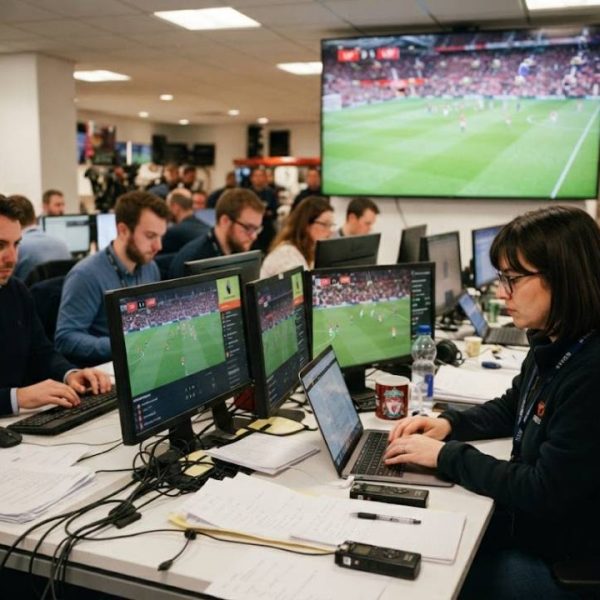
International football generates an enormous volume of content within minutes of a final whistle: match reports, player quotes, statistics breakdowns, and reaction pieces, all needed simultaneously in multiple languages for outlets covering fans across different countries who follow the same competitions.
A publication covering matches involving national teams and clubs from different language regions faces a genuine operational challenge just keeping up with the volume, let alone maintaining consistent terminology for player names, club names, and competition titles across every language version.
The sports outlets that publish fastest after a match are not necessarily the ones with the largest newsroom. They are the ones that built a content system designed for rapid multilingual turnaround.
Why match day content breaks typical publishing workflows
Most editorial systems are built around a steady daily publishing rhythm, not the compressed burst of activity that follows a major match. Within an hour of a final whistle, an outlet might need a match report, a player ratings piece, and social content ready in two or three languages, all drawing from the same source facts but requiring separate, accurate translation.
Video is the part of that burst that does not fit the same pipeline, since a clipped interview needs captions or a voice track rather than a translated paragraph. Outlets that cannot turn those around in house tend to place them with an agency that runs subtitling and multilingual voice-over as standing services, which is how PoliLingua lists them. The written report and the clip then reach a non-English reader at roughly the same time. Splitting them by several hours is what makes coverage feel secondhand.
Outlets relying on manual translation processes during this window routinely fall behind competitors, publishing their non-English coverage hours after the English version when reader interest has already moved on to the next story.
Bringing structure to high-volume multilingual publishing
A translation content management system solves this by connecting directly to the outlet's publishing platform, letting a translator work on match content the moment the English version goes live rather than waiting for a file to be exported and manually handed off.
Wordbeam's translation content management system keeps every language version of a story linked to its source article, so an editorial correction made after publication flags every translated version that needs the same update rather than leaving outdated information live in secondary languages.
Why the acronym TMS matters to sports publishers specifically
Sports content carries a specific terminology challenge that general publishing rarely deals with at the same intensity: player names, transliterated differently across languages, club nicknames, and competition names that fans expect to see rendered consistently every single time they appear.
A tms translation management system handles this through a shared terminology base, so a player's name gets transliterated the same way whether it appears in a match report, a transfer rumor, or a season preview, regardless of which translator or contributor wrote that particular piece.
Wordbeam's tms translation management system gives sports publishers exactly that kind of centralized terminology control, removing the inconsistency that frustrates dedicated fans who notice when a name or title changes spelling between articles.
What readers actually notice during a tournament
Major tournaments intensify all of this considerably. A publication covering a month-long competition across multiple languages needs consistent terminology sustained across dozens of matches and hundreds of articles, published under significant daily deadline pressure throughout the entire event.
Readers following a tournament closely notice inconsistency quickly, and editors report that terminology complaints spike noticeably during major tournaments compared to the regular season, when publishing volume and reader attention are both lower.
Sports desks covering matches for several language audiences run one of the tightest publishing cycles in the industry. The demands are the same everywhere breaking news is handled across languages: speed, accuracy and a rollback plan when a detail turns out wrong. Match coverage simply compresses all three into ninety minutes.
Clinical teams run a quieter version of the same cycle whenever a dictated note has to become a record another clinician can act on. The deadline is measured in hours rather than minutes, but the triad is identical: turn it around fast, keep every term exact, and correct the source and the translation together when something changes. Hospitals that use medical translation services built around that discipline get records that read consistently across languages and across wards. A fan notices a misspelled name; a patient lives with the consequences of a misrendered instruction.
The economics of fast multilingual publishing
Outlets that publish quickly across languages capture meaningfully more traffic in the hours immediately following a match, when reader interest peaks and then declines steadily over the following day. A non-English version published six hours late captures a fraction of the traffic the timely English version received.
That traffic gap compounds across a season. Outlets that consistently publish multilingual coverage quickly build a loyal international readership that specifically seeks out their coverage, while slower competitors lose that audience to whichever outlet reliably publishes first.
How smaller sports outlets are competing
Independent sports publications without a large multilingual editorial staff have found that proper tooling lets a small team punch above its weight, covering competitions in several languages without the overhead a larger organization would traditionally need for the same output.
That capability shift has genuinely changed the competitive landscape in sports media, letting smaller, more agile outlets compete for international readership that used to be the exclusive territory of major broadcasters and wire services with much larger budgets.
Training contributors to work inside a shared system
Freelance contributors and stringers covering matches from different regions often work independently, filing copy through whatever method is most convenient for them individually. Bringing that varied group into a single connected system takes deliberate onboarding, since a contributor used to emailing a Word document needs a reason to change a habit that has worked fine for years.
Publishers that make this transition successfully tend to demonstrate the speed benefit directly, showing contributors how much faster their work reaches readers once it flows through a connected system rather than an email attachment waiting in an editor's inbox.
Looking ahead to the next major tournament
Publishers preparing for upcoming international tournaments describe building out their multilingual content infrastructure well in advance, rather than scrambling to add language coverage once the competition has already started and reader demand has already peaked.
That advance preparation, more than any single piece of match day content, tends to determine which outlets end up capturing the bulk of international reader attention once the tournament actually begins.